
In this series of blog posts, I will be demonstrating Tufte’s five design principles and applying them to my own chosen area of interest. On this page, I shall begin by explaining how colour is being used within examples that I have found, guided by Tuftes theory on the use of colour, relating to my chosen subject area, creating Light visual Entertainments.
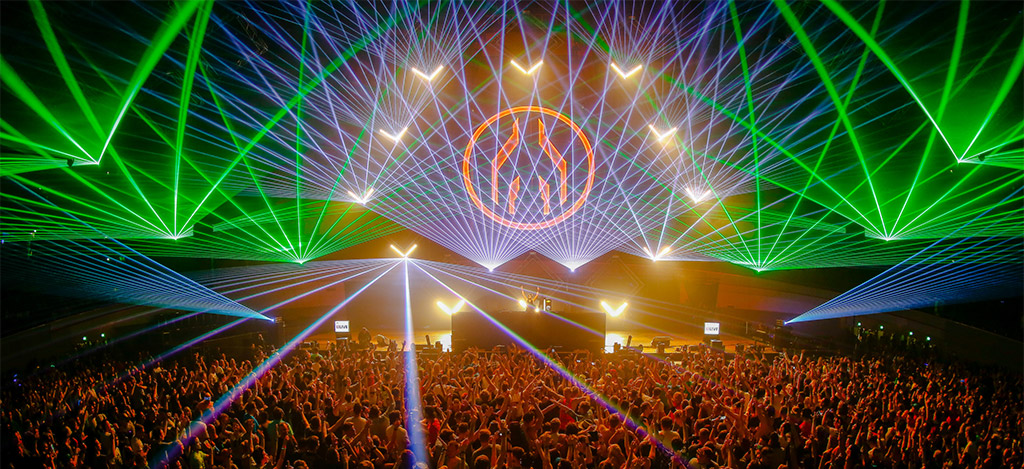
Here’s an example of a Laser show at a concert. Colours are layered in order on top of each other, chosen specifically to complement and to add highlights. The light blue provides clarity for the orange logo, making it more appealing to the crowd. Small glows of yellow v-shaped dots circle the logo, yellow and orange work with one another harmoniously, giving the logo a warmth and pleasing appeal.”Colour brings to information more than just codes naming visual nouns – colour is a natural quantifier, with a perceptually continuous span of incredible fineness of distinction, at a precision comparable to most measurement.”(Tufte, 1990)
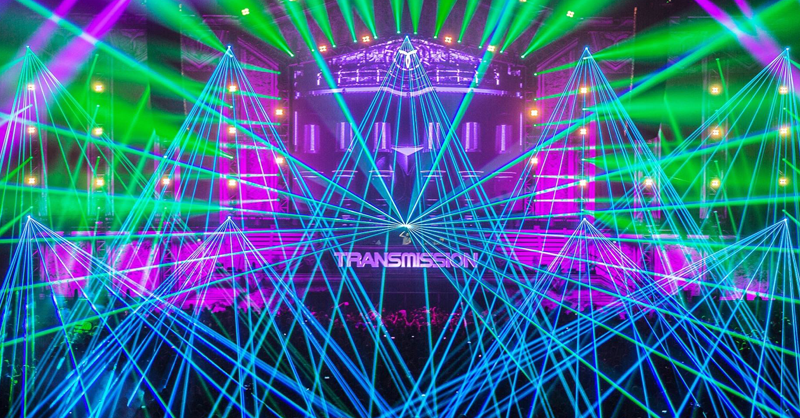
Colours in this image are scattered and projected across the stage. The Contrasting colours, green and purple, work strongly together in harmony highlighting the frame of the stage and logos. Colours in this image are scattered and projected across the stage. The Contrasting colours, green and purple, work strongly together in harmony highlighting the frame of the stage and logos. Variations of meanings can be made by the combination of colours; Green, purple and blue are considered cool as they are commonly found in nature and are known for their relaxing effect,”Use colours found in nature, especially those on the lighter side,” these colours are visually entertaining to the eye. (Tufte, 1990)
References:
Laser Show. 2020. Website: https://www.laserworld.com/en/glossary-definitions/82-l/952-laser-light-show.html (Accessed October 1 2021)
Rave Jungle. 2016. Website: https://www.ravejungle.com/2016/12/22/transmission-breathtaking-laser-show (Accessed October 4 2021)
Tufte, Edward. R, 1990. Envisioning information